Condo Corner: Buy Your GTA Condo with Your Eyes Wide Open.
A condo is more than a unit. You are also buying into a building, its budget and its future repairs. I'll help you read the signs before you firm up, so you can win the day and take your time back. Working with buyers and sellers since 2004.
Book a Discovery CallDownload the Free GuideBuying a Condo in the GTA
From downtown Toronto towers to stacked towns in Mississauga, Vaughan, Markham and Oakville, condos are often the most accessible way into the GTA market. They can be a great fit for first-time buyers, downsizers and investors alike.
The difference from buying a house: when you buy a condo, you own your unit and a share of the common elements, such as the roof, lobby, elevators, garage and amenities. That means the health of the condo corporation matters just as much as the finishes in the unit.
What You Own
Your unit, plus a proportionate share of the common elements. Parking and lockers may be owned, exclusive-use or rented, so we confirm exactly what comes with the unit.
What You Pay Monthly
Your mortgage, property tax and insurance, plus monthly condo fees (common expenses). Part of those fees goes into the reserve fund for major repairs.
What You Agree To
The declaration, by-laws and rules. They can cover pets, rentals, short-term rentals, renovations and more, and they bind every owner.
The Status Certificate
If you only read one document before buying a resale condo in Ontario, make it this one.
What It Is
Under Ontario's Condominium Act, 1998, a status certificate is a package issued by the condo corporation that shows the financial and legal position of the building and the specific unit. Anyone can request one. The corporation must provide it within 10 days, and the fee is capped at $100 including taxes.
It is a snapshot as of its date, and the corporation is generally bound by what it states to a buyer who relies on it.
What's Inside
- The unit's monthly common expenses and whether the seller is in arrears
- Any known upcoming fee increases or special assessments, and why
- Reserve fund balance and the most recent reserve fund study
- Budget and the latest audited financial statements
- Declaration, by-laws, rules and insurance certificate
- Legal proceedings involving the corporation
- Number of units leased, plus other key disclosures
Why Review It Before Firming Up
For resale condos, I typically recommend making your offer conditional on your lawyer's satisfactory review of the status certificate. That gives you time to spot financial or legal concerns while you still have the option to walk away.
Buying Pre-Construction?
New condos work differently. Instead of a status certificate, you receive a disclosure statement and generally have a 10-day cooling-off period to review it, ideally with a real estate lawyer, before your purchase becomes binding.
Please note: This page is general information, not legal advice. A real estate lawyer should always review the status certificate and your agreement before you firm up. I'll walk through the package with you and help flag questions to bring to your lawyer.
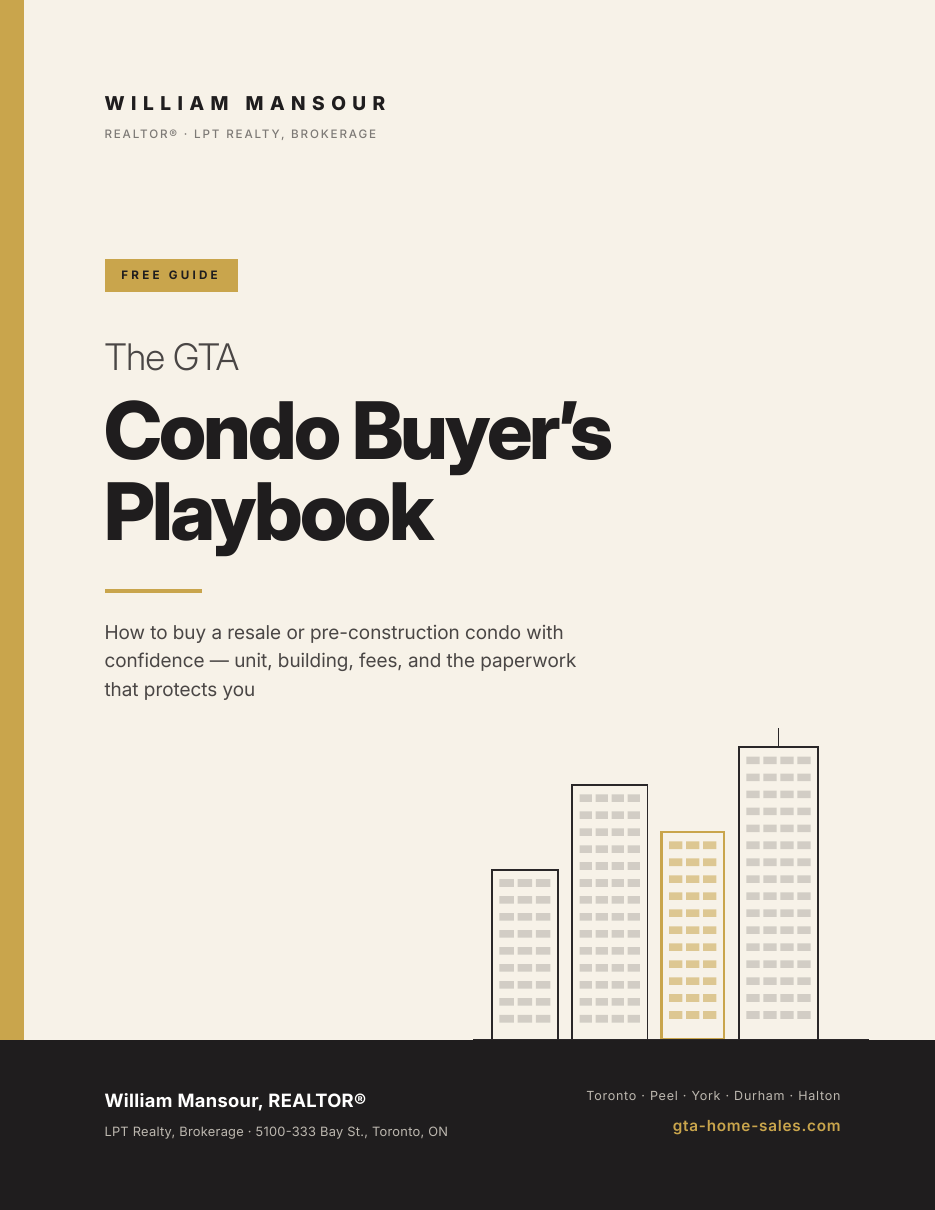
Free Guide: The GTA Condo Buyer's Playbook
Why the Reserve Fund Matters
The reserve fund is the building's savings account. The Condominium Act requires every corporation to maintain one, and it can only be used for major repairs and replacement of the common elements and assets, such as roofs, elevators, windows, balconies, parking garages and mechanical systems.
A healthy reserve fund means those big-ticket items can be paid for when they come due. An underfunded one means owners may face sharp fee increases or special assessments down the road.
Funded by Owners
A portion of every owner's monthly condo fee goes into the reserve fund.
Built for the Long Term
Contributions are planned years ahead, so today's owners pay their fair share of future wear and tear.
Protects Your Value
Well-funded, well-maintained buildings tend to be easier to finance, insure and resell.
Reserve Fund Studies
A reserve fund study is a professional review of the building's major components, their expected lifespan and the cost to repair or replace them. It projects at least 30 years ahead and sets out how much the reserve fund needs to keep up.
When They Happen
A comprehensive study is required within the first year after the condo is registered, then updated studies follow at least every three years.
What Happens Next
After receiving a study, the board must propose a plan for future funding and send owners a notice of that plan, which often explains fee changes.
What to Look For
When the last study was done, whether contributions are keeping pace with its recommendations, and what major work is coming in the next few years.
Special Assessments
A special assessment is a one-time charge to owners on top of regular condo fees. It usually comes up when the reserve fund falls short of a major repair, or when an unexpected cost such as a lawsuit, an insurance deductible or emergency work hits the building.
Depending on the building and the work involved, a special assessment can run from a few hundred dollars to many thousands per unit. The status certificate should disclose any assessment already levied and any known circumstances that may raise fees.
Coach's tip: Who pays an assessment that is announced around closing can be addressed in your offer. I'll make sure it's on the table, and your lawyer can confirm the wording.
Condo Red Flags Checklist
None of these automatically means "walk away," but each one deserves a closer look before you firm up.
Money & Fees
- Reserve fund well below what the latest study recommends
- Large recent fee jumps, or fees frozen for years despite rising costs
- A special assessment levied, planned or rumoured
- Owners in arrears, or a budget running a deficit
- Reserve fund study overdue or out of date
Building & Legal
- Major repairs coming up: garage membrane, roof, windows, elevators, balconies
- Lawsuits or legal proceedings involving the corporation
- High insurance deductibles that could fall to owners
- Unresolved deficiencies in a newer building (check warranty status)
- Recurring issues in board minutes, such as leaks or elevator outages
Rules & Lifestyle
- Restrictions on pets, rentals or short-term rentals that don't fit your plans
- Renovation rules that limit what you can change
- A high share of leased units if you're looking for an owner-occupied feel
The Unit Itself
- Parking and locker: owned, exclusive-use or rented?
- What condo fees include (heat, hydro, water)
- Signs of water damage, or unapproved alterations
- Noise, views and future development nearby
How I Help Condo Buyers
Shortlist the Right Buildings
We compare fees, amenities, building age, management and rules across the GTA, so you focus on buildings that fit your life and budget.
Know Your True Monthly Cost
Mortgage, condo fees, property tax, insurance and land transfer tax (including Toronto's municipal tax), planned up front.
Write a Protected Offer
Conditions and timelines that give your lawyer time to review the status certificate, so you never firm up blind.
Read Between the Lines
I'll go through the package with you, flag questions for your lawyer, and dig into what the numbers say about the building's future.
Ready to Find the Right Condo?
A quick, no-pressure call is the best place to start. We'll talk about your goals, your budget and the buildings worth a closer look.
Book a Discovery CallDownload the Condo Playbook