Move-Up Buyers: Your Game Plan for the Next Home.
Outgrowing your space? Moving up means buying and selling at the same time. I will help you decide whether to buy first or sell first, line up financing and closing dates, and prep your current home so both sides of the move work together. Working with buyers and sellers since 2004.
Book a Move-Up Strategy CallDownload the Move-Up PlaybookWho This Page Is For
Upsizing across Toronto, Peel, York, Durham and Halton.
Growing Families
A new baby, kids who need their own rooms, or a parent moving in. Your home worked for the life you had; now you need one that fits the life you have.
More Space to Live
A bigger kitchen, a real backyard, a garage, a basement for the kids to take over. Room to breathe without stepping on each other.
A Real Home Office
Working from home at the kitchen table gets old fast. A dedicated office, or two, with a door that closes is a common reason to move up.
Better School Zones
You want to be in or near the school boards and programs you care about before the kids start or change schools.
The Big Decision: Buy First or Sell First?
Every move-up starts with the same question. There is no single right answer; it depends on your equity, your financing, your timeline, how quickly homes like yours are selling and how much risk you are comfortable carrying. Here is how the two plays compare.
Buy First
You find and firm up the next home, then sell your current one.
Pros
- You do not risk selling and having nowhere to go
- You can shop with less time pressure for the right home
- One move, straight from the old home to the new one
Cons & risks
- You may need to sell by a fixed date, which can weaken your negotiating position
- If the sale takes longer or comes in lower than planned, your budget is squeezed
- Possible bridge financing or carrying two homes for a period
Sell First
You sell your current home, then buy with your equity known.
Pros
- You know exactly what your equity is before you buy
- No risk of owning two homes at once
- You can write a cleaner offer with no sale-of-property condition
Cons & risks
- Pressure to find the next home before your sale closes
- You may need a rent-back, extended closing or short-term rental
- Possible extra move and storage costs if dates do not line up
Leans Buy First
Strong equity, a lender who has confirmed you can carry both homes if needed, and homes like yours are selling steadily in your area.
Leans Sell First
Your budget depends on the sale price, you want zero risk of two mortgages, or homes like yours are taking longer to sell.
Middle Ground
A conditional offer on the sale of your home, or firm up both sides close together with flexible closing dates. We look at both before you commit.
Game-plan tip: Decide your path before you start touring. Falling for a home first and working out the plan afterwards is how move-up buyers end up rushed on one side of the deal.
Conditional Offers: The Sale-of-Property Condition
In Ontario, a buyer can make an offer conditional on the sale of their current home. If your home does not sell by the date in the agreement, you can walk away from the purchase according to the terms of the condition. It protects you from owning two homes, but it also asks the seller to wait on you.
How It Works
Your offer includes a clause giving you a set period to sell your current home. The deal becomes firm only once the condition is met or waived in writing. Your lawyer reviews the wording before you sign.
The Escape Clause
Sellers often add an escape clause so they can keep marketing their home. If they get another acceptable offer, you are given a short window, set out in the agreement, to waive your condition or step aside.
When It Fits (and When It Does Not)
It can work in a balanced or slower market, or when a home has been listed for a while. In multiple-offer situations, a conditional offer is often less attractive to sellers than a firm one.
General information only, not legal advice. The exact wording and time periods of any condition are negotiated and should be reviewed by your real estate lawyer.
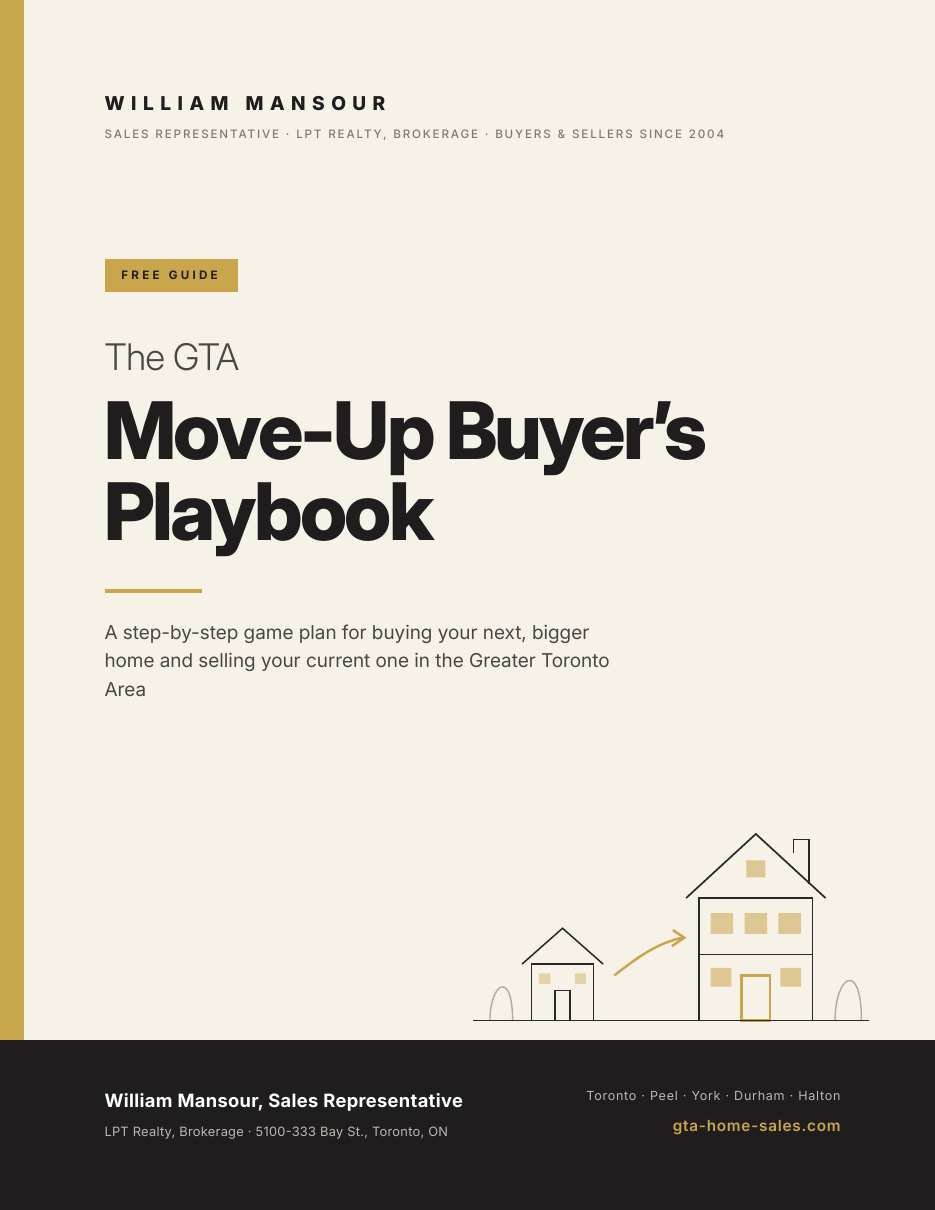
Free Guide: The GTA Move-Up Buyer's Playbook
Bridge Financing, Porting & Blending
How you finance the move-up can matter as much as the homes themselves. These are the tools most move-up buyers ask about. Every lender has its own rules, so talk to your lender or mortgage broker early, before you write an offer.
Bridge Financing
A short-term loan that lets you use the equity in your current home toward the new one when your purchase closes before your sale. Lenders usually want to see a firm sale on your current home, and the loan has its own interest and fees.
Porting Your Mortgage
Some mortgages let you move your existing rate and terms to the new property. Whether you can port, and the time window allowed between closings, depends on your lender and your mortgage terms.
Blending (and Increasing)
If you need to borrow more, some lenders will combine your current mortgage with new money for the extra amount, giving you a blended rate. It is worth comparing against breaking the mortgage and starting fresh.
Ask before you sign: What would a prepayment penalty be if I break my mortgage? Can I port, and how long do I have between closings? Will you approve bridge financing, and what do you need from me? Get the answers in writing.
General information only, not mortgage or financial advice. Rates, penalties and qualification rules vary by lender and change over time.
Timing Two Closings
The goal is simple: keys to the new home in your hand before you hand over the keys to the old one, without paying for two homes longer than you need to. These are the ways we line up the dates.
Same-Day Closings
Your sale and purchase close on the same day. It is efficient, but tight: your lawyer uses the sale money to fund the purchase, and any delay on one side affects the other.
A Planned Overlap
Your purchase closes a few days before your sale. It gives you time to move, clean and paint without rushing, usually with bridge financing covering the gap.
Extended Closing
You negotiate a longer closing on the sale or the purchase so the two dates line up. It is often traded against price or other terms in the negotiation.
Rent-Back
You sell, close, and then rent your old home back from the buyer for an agreed period while you finish buying. It needs a clear written agreement, and your lawyer and insurer should know about it.
Game-plan tip: If you can, steer away from a Friday or month-end closing. Those tend to be busy days for lawyers, lenders and movers, and a delay can leave you waiting for keys over a weekend.
Budgeting Both Sides of the Move
A move-up budget has two columns: what you will walk away with from your sale, and what it will cost to buy and move. Add a third line if there is any chance you will carry both homes for a while.
Your Selling Side
- Estimated sale price (start with a current home value)
- Mortgage payout and any prepayment penalty
- Real estate commission (plus HST)
- Legal fees for the sale
- Pre-listing repairs, cleaning and staging
Your Buying Side
- Down payment from equity and savings
- Ontario land transfer tax
- Toronto municipal land transfer tax if the home is in the City of Toronto
- Legal fees, title insurance and adjustments
- Home inspection, moving and immediate repairs
Carrying Two Homes
- Two mortgage payments, or bridge loan interest
- Property tax on both homes
- Utilities and insurance on both homes
- Storage or short-term rental if dates do not line up
Please note: No dollar figures are quoted here on purpose. Buying in the City of Toronto generally means paying both the provincial and municipal land transfer tax. First-time buyer refunds generally do not apply if you have owned a home before. Confirm current rates on ontario.ca and toronto.ca, and with your lawyer and lender.
Prepping Your Current Home for Sale
Declutter & Pre-Pack
You are moving anyway, so start now. Pack the off-season items, extra furniture and kids' overflow so rooms look bigger in photos and showings.
Small Repairs, Big Impression
Fix the dripping tap, the sticky door and the scuffed trim. Small issues make buyers wonder what else has been missed.
Clean, Bright & Neutral
A deep clean, good lighting and calmer colours help buyers picture themselves in the space. Ask before taking on big renovations; many do not pay back.
Showings With a Busy Family
We plan showing windows around school runs, naps and pets, with a quick tidy-up routine everyone knows. That makes it easier to keep the home show-ready.
Game-plan tip: Get your current home prepped and priced properly before you shop hard. A strong, well-timed sale is what makes the rest of the move-up play work.
Choosing Your Next Community
Moving up is a chance to choose where you want to live for the next stage of family life, not just a bigger house. We weigh space, schools, commute, parks and amenities against your budget. Explore my community pages for a closer look.
Oakville
Established family streets and newer north-end communities, with lakefront parks and GO and QEW access.
Mississauga
Lakeside neighbourhoods and inland family areas with a wide mix of detached homes and towns.
Burlington
Waterfront living and family neighbourhoods, with QEW and GO links east and west.
Milton
Newer family communities and the charm of Old Milton, often with more space for the budget.
Halton Hills
Georgetown, Acton and surrounding areas for bigger lots and a smaller-town pace inside the GTA.
School boundaries change. Always confirm catchments and programs on the school board's locator or by contacting the school before you buy.
Your Step-by-Step Move-Up Game Plan
Strategy Call
Goals, timeline, must-haves and the communities on your list. We map out the whole play before you make a move.
Know Your Numbers
A current value for your home, a lender conversation and a two-sided budget, so you know your real range.
Choose Your Path
Buy first, sell first or a conditional offer, picked for your equity, financing and the market for homes like yours.
Prep & Price
Declutter, repairs and a pricing strategy for your current home, timed with your search.
Shortlist & Tour
Focused showings in the communities that fit, with school and commute checks built in.
Write the Right Offer
Conditions, deposits and closing dates structured around your plan, reviewed by your lawyer.
Line Up the Closings
Lawyers, lender, movers and dates on one calendar, with a backup plan if anything slips.
Keys & Move Day
Final walkthrough, keys and a smooth handoff from the old home to the new one.
Move-Up Buyer FAQ
Conditional offers, keeping your mortgage rate, timing two closings and land transfer tax. Buy first vs sell first and bridge financing are covered above and in the Real Estate FAQ.
What is a sale-of-property condition in Ontario?
It is a condition in your offer that makes the purchase depend on selling your current home by a set date. Sellers often add an escape clause so they can keep marketing; if they get another acceptable offer, you have a short window set out in the agreement to waive the condition or step aside. Your lawyer should review the wording.
Can I keep my current mortgage rate when I move up?
Sometimes. Some mortgages can be ported to a new property, and some lenders will blend your existing rate with new money if you need to borrow more. The rules, timing windows and any prepayment penalties depend on your lender and your mortgage terms, so get the details in writing before you firm up.
How do we time the two closings?
Common options are same-day closings, a planned overlap where you buy a few days before you sell, an extended closing, or a rent-back on your sale. The right choice balances cost, risk and how much breathing room your family needs on moving day.
Will I pay land transfer tax again?
Yes. Ontario land transfer tax generally applies to each purchase, and homes in the City of Toronto also generally pay the municipal land transfer tax. First-time buyer refunds generally do not apply if you have owned a home before. Use the official Ontario and City of Toronto calculators and confirm with your lawyer.
Get the Free Move-Up Buyer's Playbook
The GTA Move-Up Buyer's Playbook includes a buy-first vs sell-first decision worksheet, a two-closings timeline, a two-sided budget worksheet, a home-prep checklist, questions to ask your lender and a step-by-step game plan. Enter your details in the form above and I will email it to you. The PDF is never linked directly on this page.
General consumer information for people buying and selling a home in the Greater Toronto Area. Not legal, tax, financial or mortgage advice. Financing options, penalties, conditions and closing terms vary; confirm them with your lender, real estate lawyer and other licensed advisers before you act. No rates, costs or outcomes are promised.
Ready to Make Your Move Up?
A short, no-pressure call is the best place to start. We will talk about your timeline, your current home and the communities worth a closer look, then build a game plan for both sides of the move, so you can win the day and take your time back.
Book a Move-Up Strategy CallWhat's My Current Home Worth?