GTA Neighbourhood Comparison: Where Does Your Dollar Go Furthest in 2026?

One of the most powerful advantages available to GTA home buyers in 2026 is the sheer diversity of communities within commuting distance of Toronto's core. From established urban neighbourhoods to growing suburban cities, the GTA offers a spectrum of price points, property types, and lifestyles, and the buyers who take the time to explore that spectrum consistently get more home for their money.
This guide is designed to help you think strategically about where to buy, not just emotionally. Because in the GTA, location flexibility is one of the most valuable financial tools a buyer has.
If you're moving to the area from another city, province or country, my Relocating to the GTA guide covers commutes, schools and buying remotely.
The "Stay in Toronto" Trap
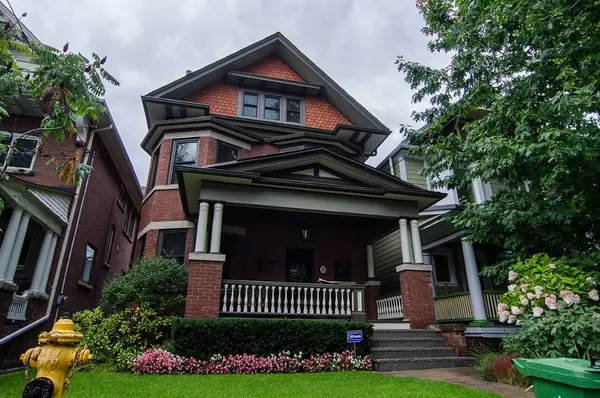
Many buyers, especially first-timers, start their search hyper-focused on specific Toronto neighbourhoods they already know and love. This is understandable; you want to stay close to your community, your gym, and your favourite coffee shop. But this approach often leaves buyers perpetually priced out of the market, waiting for a miracle deal that never comes.
The reality is that a buyer who opens their search radius by even 20 to 30 minutes often discovers properties with:
- Significantly more square footage
- Larger lots and outdoor space
- Newer construction and updated finishes
- Lower property taxes in some cases
- Better school ratings and community infrastructure
And they achieve all of this while staying within a reasonable commute of Toronto's employment core, especially with the GO Transit network's continued expansion.
What to Look For When Comparing Communities
Beyond price, here are the factors that matter most when comparing GTA communities:
Transit Connectivity
GO Train access is a game-changer. Communities with direct GO Train service to Union Station unlock a much larger buyer pool when you eventually sell, and they're highly livable for non-drivers. Look for communities within walking or short drive distance of a GO station.
School Quality
Whether or not you have children, school ratings have a direct impact on property values. Homes in strong school catchments tend to hold their value better during market corrections and appreciate faster in up markets.
Development Pipeline
Growing communities with planned infrastructure investments, new transit lines, commercial development, and hospital expansions, tend to outperform on appreciation. Look at what's being built, not just what exists today.
Price-Per-Square-Foot
When comparing across communities, price-per-square-foot gives you the clearest apples-to-apples comparison of what your dollar buys. Your agent can pull this data for any area you're seriously considering.
Property Type Mix
Different communities have different inventory mixes. Some areas are dominated by condos, others by semis and townhouses, and others by detached homes. Know what type of ownership structure aligns with your lifestyle and long-term goals before you decide where to search.
The Value Spectrum Across the GTA
Rather than naming specific cities (which can shift rapidly as markets evolve), here's a useful framework for thinking about the GTA value spectrum:
Urban Core Communities
Highest price per square foot. Condos dominate. Strong walkability and transit. Ideal for buyers prioritizing lifestyle and amenities over space. Lower long-term appreciation upside because prices are already elevated.
Inner Ring Communities
Well-established cities and towns surrounding Toronto. Mix of freehold and condo products. Strong infrastructure. Price premium exists but is more justified by proven appreciation track records. Good balance of lifestyle and investment value.
Outer Ring Communities
Growing cities and towns at the edges of the GTA. Significantly more space and value per dollar. Higher dependence on cars or commuter rail. Highest appreciation potential as growth infrastructure catches up with demand. Ideal for families prioritizing square footage and outdoor space.
Beyond the GTA
Communities slightly outside traditional GTA boundaries, sometimes called the "Greater Golden Horseshoe," have attracted significant buyer migration over the past several years. If you have flexibility in your work location (or work remotely), exploring these areas can yield exceptional value.
The Commute Math: What Are You Really Paying?
When buyers hesitate to look outside their comfort zone, commute time is usually the objection. Here's a useful exercise: calculate the real cost of staying close versus moving further out.
If buying closer to Toronto costs you an extra $150,000 in purchase price:
- At 5% interest over 25 years, that's approximately $875/month in additional mortgage payments
- That's $10,500 per year in extra carrying cost to save a 20-minute commute
- Divide $10,500 by 240 workdays per year: you're paying roughly $43.75 per day for convenience
That math doesn't always work in favour of staying close. And when you factor in a GO Train pass being far cheaper than downtown parking, the calculus can shift dramatically.
New Build vs. Resale: A GTA-Specific Consideration
In the GTA's outer communities, new construction is often a viable option that doesn't exist in the urban core. New builds offer:
- Tarion Warranty protection for the first several years
- Modern layouts and finishes from day one
- HST rebates for primary residence buyers
- The ability to customize finishes in some pre-construction scenarios
Resale homes offer immediate occupancy, established neighbourhoods, and sometimes better lot sizes, especially in older communities. Your agent should help you weigh these trade-offs for your specific situation.
How to Build Your GTA Community Shortlist
Here's a practical approach to narrowing down your search:
- Define your non-negotiables: commute limit, property type, must-have amenities
- Set your budget with your mortgage broker: know exactly what you're working with
- Ask your agent to pull comparative data across 4 and 6 communities that meet your criteria
- Do a weekend drive through your top 2 and 3 contenders - Google Street View doesn't replace showing up in person
- Attend open houses across different communities before committing to one area
The GTA is a large and diverse market. Buyers who approach it with strategic flexibility consistently outperform those who limit themselves to one neighbourhood or city. If you'd like a personalized community comparison based on your budget and priorities, reach out; it's one of the most valuable conversations we have with buyers, and it costs you nothing.
Categories
Recent Posts